If you think that my rants on food are insane, I know how you feel. There are several types of food that people say are awful that I think they're crazy for thinking that (I'm going to talk about one next week, in fact). As I've mentioned in my previous two installments of "HOLY CRAP DON'T EAT THAT" is that the foods I'm talking about are not, in and of themselves bad. However, they've been embraced by the food industry as cheap, easy ways to either make the food taste better to the American palette or boost the nutritional content of a food and have, therefore, been put in everything. Corn syrup and salt have been added to make poor quality food taste better, and our health has suffered because of it. Soy has been added because it has protein in it. At some point, food manufacturers discovered that items that have added protein can have their prices increased, so here we are with tons of food with soy flour, soy lecithin, soybean oil, etc.
Soy beans are the food equivalent of bamboo. They grow quickly, they're hardy, and they recover (grow back) quickly. They can also be used in a metric ton of stuff. Soy can be used to replace petroleum oil in everything from plastic to the rubber in tires. Seriously, except for gasoline (they're still working on it), if you can make it out of petroleum, you can make it out of soybean oil. This stuff is a freaking miracle. So why do I try to refuse to put it in my body?
Here's the part where I sound crazy then I'll back up and explain myself. If you are female or have a female of any age in your house you should seriously consider burning everything with soy in it. BURN IT. I'm not kidding. If you are the miraculous single dad that has 3 boys, well, this isn't such a concern, but you might want to pay attention if you ever plan to have a woman eat at your house again.
Before we started using soy in literally everything we put into our bodies, it had one major use - estrogen replacement. See, soy has what's called a phytoestrogen, or plant estrogen. For those of you who skipped biology class, estrogen is the group of primary sex hormones for females of all species. They create breasts, increase fat stores, stimulate uterine lining growth, reduce calcium absorption in bones, and stimulate ovulation among like 50 other things. In short, estrogen makes girls become women and women to become fertile. That seems great at the surface.
In fact, there's evidence that small amounts of plant estrogen before and during puberty can reduce the chance of breast and prostate cancer when children reach adulthood. There's also evidence that once a woman has had breast cancer and gone into remission, taking small amounts of plant estrogen can increase a woman's chance of staying in remission. Again, great and wonderful concepts.
So, why don't I eat soy and recommend that every woman burn all of the soy additives in her house? Because we, as Americans do not eat a small amount of soy. If you eat processed foods at all, you eat soy all the time every day. Most fast food burgers have soy in the bun, soy fillers in the burger, and soybean oil on the grill that it's cooked on. Then you have the french fries powdered with soy flour then deep fried in soybean oil. Even if you order the salad, your salad dressing's most likely made with soybean oil. In fact, the only thing I can think of that wouldn't have any soy in it at a fast food restaurant is the sodas. I'm not convinced it's not there somewhere, but it isn't in the ingredients.
Remember all those things I mentioned that soy does for women? Imagine enhancing them every time you eat anything. Your breasts will get bigger (happy time for men, but sad time for your back). Your fat stores will increase (insert screams here). Your bones will absorb much less calcium (broken hips anyone?). Then we get to the really scary stuff: It thickens your uterine lining and stimulates ovulation. Want to know a way to instantly increase your menstrual cramps? Thicken your uterine lining! Yay! Want to know a way to create pain between menstrual cycles? Stimulate ovulation too much. Double yay!
My family has a history of polycystic ovarian syndrome. That means we're prone to getting tons of cysts on our ovaries. These cysts hurt like words I've promised myself I won't say on this blog. Let's just say that I have never been stabbed in my sides, but I think I know how it'd feel. Guess what ovulation stimulation does? It creates more freaking cysts! Yeah, really, when I'm really, really careful about my soy intake, the knife-like pain in my lady parts decreases exponentially. I often wonder how many women are out there experiencing this pain and not knowing why.
Okay, so we know what excess estrogen can do to a woman, but what's the problem, right? Our bodies are programmed to change the amount of estrogen in our bodies to be less or more depending on our environment, right? Right. Kinda.
See, every woman's body comes equipped with a switch in her brain to stop producing estrogens when they get to a certain concentration. So, we shouldn't often have too much estrogen, right? Wrong.
The problem is that in addition to giving us an estrogen boost, soy goes up and disables that switch. That means, when you have an excess of estrogen, your body can't stop producing it. It just keeps making more and more and more.
So, now we have a situation where you're producing estrogen naturally, adding to your natural estrogen with a natural plant estrogen, and now a body that can't stop producing your natural estrogen. Oh, and did I mention that the fat that the estrogen creates stores estrogen in it which means you're now toxic with it? It does.
Doesn't that seem like it's going to lead to a bad situation? It does. Excess soy leads to excess weight gain, increased menstrual pain, and even infertility. I've read journal articles about the dangers of soy, and I can't figure out why it's still on the market and in every freaking thing I can buy. My only answer is that it must be a capitalism thing where the food manufacturers have discovered how much money they can make off of it, and refuse to let it be taken off the market. After all, they all say those convenience foods shouldn't be eaten as much as they obviously are. Yeah, that's happening, guys.
So, if you want the women in your life (including you, if you're female) to be healthy, I highly recommend eschewing soy. That means, to begin with, substituting canola oil for vegetable oil (that's actually soybean oil, kids) then start reading your freaking labels. Soy lecithin makes fats coagulate with your food easier. Gee that seems healthy. Give us more hormones that we can handle and blend fats into our food. Add in soy milk, soy flour, soy grits, soy meal, and soy sauce and you have a huge list of what you shouldn't be eating.
If you want an easy way to know if you have soy in your food, skip right to the bottom where all food products are now required to put allergy information and see what's listed there. If soy's there, put it down. Then write a letter and scream at the company. The only way to stop manufacturers from using this as an additive is to stop giving them monetary benefits from doing so.
Showing posts with label random sunday ramblings. Show all posts
Showing posts with label random sunday ramblings. Show all posts
Sunday, July 29, 2012

Sunday, July 22, 2012
Corn Syrup isn't Sugar
I would like to introduce you to my least favorite commercial on television. Oddly enough, the company that makes it doesn't actually have it up anywhere on the internet, so you're getting an awfully filmed version from YouTube. I'll talk about why it makes me mad after it's over.
Once again, I'm going to remind you that these are just my personal views, and you are, in no way, required to believe what I believe. I should also mention that the First Amendment protects my right to say what I want to say.
C.Y.A. statements aside, I believe that corn syrup is the cornerstone upon which American obesity is built. I'll also mention that a lack of activity and crappy eating habits make up the foundation, but today, I'm going to tackle corn syrup. In 2010, the Corn Refiner's Association petitioned to have "high fructose corn syrup" renamed to "corn sugar." On May 30, 2012, the FDA rejected the petition on the grounds that sugar is defined as a solid, dry, crystallized food.
Regardless of the FDA's decision, it appears that the Corn Refiner's Association is attempting to get the American public to rename it themselves. I personally agree fully with the FDA because I feel like corn syrup provides a disservice to the American people.
I want to make it clear that I have nothing against corn or actually corn syrup in general. In fact, my daughter suffered from severe constipation when she was an infant, and her pediatrician recommended adding a teaspoon of Karo syrup to one of her bottles a day (before someone says something about nursing, I feel like I should say that I breastfed as long as I could). The reason it works is because corn syrup has a sugar alcohol called sorbitol that makes your intestines relax.
I also want to say that I have nothing against sweet things. I have issues with my weight because there's sugar in the world. However, I think that sugar from sugar cane is where most of our sweet stuff should come from and I have several reasons why.
Let's talk about pure numbers first. 1 teaspoon of high fructose corn syrup has 53 calories and 14 grams of carbohydrates. 1 teaspoon of granulated sugar has 16 calories and 4 grams of carbohydrates. That means that, even if you took in the 3.3 teaspoons of sugar you'd need to have the same amount of calories, you'd still have taken in almost 40 carbohydrates less than corn syrup. Since you need to take in about 750 g of carbohydrates per day, 1 teaspoon of high fructose corn syrup is 7% of your daily intake. That's pretty big, compared to 0.5% you'd get from your teaspoon of granulated sugar. It's worth mentioning that high fructose corn syrup is 6 times sweeter than sugar.
Okay, so let's move on to the difference between sucrose and fructose. Science time! (Sorry.)
 Meet sucrose, it comes from the sugar cane plant. It's a hydrocarbon with two six-sided rings connected by what we call an ether (the oxygen in the middle). Despite what many people think, sucrose is considered a complex carbohydrate. Complex carbohydrates are more difficult for your body to break down and store as fat.
 This is fructose. It's the sugar that's released from fruits and vegetables (that's why the "fru" part). It's a very simple sugar that your body can process and store as fat really really quickly.
So, that's the basic difference. For the record, all fructose does not come from corn. Any time you have a fruit or vegetable that's even a little sweet, it has fructose in it. However, you don't see concentrated apple juice being used in every little thing to sweeten it (it is a fantastic sweetener, but the point is still there). Your body can and does tell the difference between sucrose and fructose, and I'm about to tell you how.
I'm a favor of empirical research which means I like research that can be replicated and tells us things about ourselves. I have two very important studies that have to do with fructose vs sucrose in which you might be interested.
Researchers at Princeton University gave a large number of rats diets exclusively of sucrose and fructose measured to give the rats the same amount of calories. Now, no one's saying that you should eat a diet of exclusively sugar. This was a test to see what the difference of the two types of sugar would be. In the study, the rats who ate the fructose gained more weight, especially in the abdominal area, kept the weight on longer after returned to normal food, and had raised triglyceride levels which are unhealthy fats in the blood.
This is just the latest in the Princeton line of corn syrup studies. The link up there will take you to an article that lines them out, but they all come down to this: When you eat corn syrup, you gain more weight. If you don't know that being overweight is bad for your body, you should pay attention.
The second study comes from UCLA where they fed rats a high fructose diet once again. In this study, the rats' brains showed delayed responses after 6 weeks of a high fructose diet. That means, the more fructose you take in, the slower your brain works. If your kids' cereal has corn syrup in it, you might want to think about that before you send her off to school with that in her belly.
So, there's my rant on why you should be controlling your family's high fructose corn syrup intake. Really think about it the next time you're thinking of buying something with HFCS in it.
C.Y.A. statements aside, I believe that corn syrup is the cornerstone upon which American obesity is built. I'll also mention that a lack of activity and crappy eating habits make up the foundation, but today, I'm going to tackle corn syrup. In 2010, the Corn Refiner's Association petitioned to have "high fructose corn syrup" renamed to "corn sugar." On May 30, 2012, the FDA rejected the petition on the grounds that sugar is defined as a solid, dry, crystallized food.
Regardless of the FDA's decision, it appears that the Corn Refiner's Association is attempting to get the American public to rename it themselves. I personally agree fully with the FDA because I feel like corn syrup provides a disservice to the American people.
I want to make it clear that I have nothing against corn or actually corn syrup in general. In fact, my daughter suffered from severe constipation when she was an infant, and her pediatrician recommended adding a teaspoon of Karo syrup to one of her bottles a day (before someone says something about nursing, I feel like I should say that I breastfed as long as I could). The reason it works is because corn syrup has a sugar alcohol called sorbitol that makes your intestines relax.
I also want to say that I have nothing against sweet things. I have issues with my weight because there's sugar in the world. However, I think that sugar from sugar cane is where most of our sweet stuff should come from and I have several reasons why.
Let's talk about pure numbers first. 1 teaspoon of high fructose corn syrup has 53 calories and 14 grams of carbohydrates. 1 teaspoon of granulated sugar has 16 calories and 4 grams of carbohydrates. That means that, even if you took in the 3.3 teaspoons of sugar you'd need to have the same amount of calories, you'd still have taken in almost 40 carbohydrates less than corn syrup. Since you need to take in about 750 g of carbohydrates per day, 1 teaspoon of high fructose corn syrup is 7% of your daily intake. That's pretty big, compared to 0.5% you'd get from your teaspoon of granulated sugar. It's worth mentioning that high fructose corn syrup is 6 times sweeter than sugar.
Okay, so let's move on to the difference between sucrose and fructose. Science time! (Sorry.)
 Meet sucrose, it comes from the sugar cane plant. It's a hydrocarbon with two six-sided rings connected by what we call an ether (the oxygen in the middle). Despite what many people think, sucrose is considered a complex carbohydrate. Complex carbohydrates are more difficult for your body to break down and store as fat.
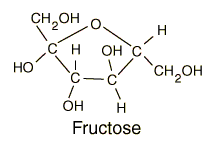 This is fructose. It's the sugar that's released from fruits and vegetables (that's why the "fru" part). It's a very simple sugar that your body can process and store as fat really really quickly.
So, that's the basic difference. For the record, all fructose does not come from corn. Any time you have a fruit or vegetable that's even a little sweet, it has fructose in it. However, you don't see concentrated apple juice being used in every little thing to sweeten it (it is a fantastic sweetener, but the point is still there). Your body can and does tell the difference between sucrose and fructose, and I'm about to tell you how.
I'm a favor of empirical research which means I like research that can be replicated and tells us things about ourselves. I have two very important studies that have to do with fructose vs sucrose in which you might be interested.
Researchers at Princeton University gave a large number of rats diets exclusively of sucrose and fructose measured to give the rats the same amount of calories. Now, no one's saying that you should eat a diet of exclusively sugar. This was a test to see what the difference of the two types of sugar would be. In the study, the rats who ate the fructose gained more weight, especially in the abdominal area, kept the weight on longer after returned to normal food, and had raised triglyceride levels which are unhealthy fats in the blood.
This is just the latest in the Princeton line of corn syrup studies. The link up there will take you to an article that lines them out, but they all come down to this: When you eat corn syrup, you gain more weight. If you don't know that being overweight is bad for your body, you should pay attention.
The second study comes from UCLA where they fed rats a high fructose diet once again. In this study, the rats' brains showed delayed responses after 6 weeks of a high fructose diet. That means, the more fructose you take in, the slower your brain works. If your kids' cereal has corn syrup in it, you might want to think about that before you send her off to school with that in her belly.
So, there's my rant on why you should be controlling your family's high fructose corn syrup intake. Really think about it the next time you're thinking of buying something with HFCS in it.
Sunday, July 15, 2012
Let's Talk About Salt
The music embedded above is just a silly thing because that's what I hear in my head when I say "Let's talk about salt." That topic might have been great for Salt 'n' Pepa to sing about.
Over the next three weeks, I'm going to talk about three items that are in every, single item you buy pre-made at the grocery store: salt, soy, and corn syrup. All three won't appear in every, single item, but at least one of those three will be in your convenience food that you've picked up, unless you've found a magical store that sells pre-made food without them. If you have, please share it with the class. The thing about these elements is that they aren't necessarily bad in small amounts, but in the amount we get, they're awful.
Quick statement to cover my butt. Everything I say about this is my own opinion, even if I support it by scientific fact. You are not required, in any way, to agree with what I'm saying or to change what you're doing. I am simply going to pass on information as I understand it and you can make your own decisions about that information.
First thing you should know - Salt is a vital mineral that your body requires to function properly. Sodium ions both monitor and control the absorption of water into your body's cells as well as making sure that the neurons in your muscles can send signals to one another. That means that, even if you could, you shouldn't eliminate salt from your diet completely.
Unfortunately, the companies that make our food have made that decision for us. If you ever look at a nutrition label and this section:
 has more than 0 mg in it, your food probably has added salt. Double check the ingredients to make sure. The FDA recommends about 6 g per day for a person's intake, but some doctors are now saying you can get by on 50 to 100 mg of salt per day. That's not a while lot. To put it in perspective, 1 teaspoon of salt weighs over 5500 mg. That means, you probably need less than 1/8 tsp of salt in your daily diet and not more than 1 tsp. That's not very much! Most people think they need a lot more.
So, what's so bad about salt? Nothing, until you take in too much. When you take in too much salt, you run the risk of developing a case of hypernatremia which translates into "too much salt in your blood." In this situation, your kidneys can no longer cope because you now have more salt than water in their blood. This is the result of dehydration.
In the long term, hypernatremia causes high blood pressure, heart disease, stroke and osteoporosis. This is because, when your sodium levels are too high, they get too good at transferring water out of your cells If your cells can't absorb liquid, they can't take in calcium for your bones, and if they don't have enough water, it becomes difficult to push your blood through your body.
 If you're not sure, that's a earthenware crock filled with kosher salt. It holds about a pound of salt. We use kosher salt because its coarse grind dissolves so much easier than typical salt. Why do we keep it loose instead of in shakers? Because we know exactly how much we are using. When you grab a pinch of salt, you know how much you've grabbed. If you use a salt shaker, you can't always see it coming out, and you might end up using more than you intended. In that case, sprinkle the salt over your hand then put it in the food from your hand.
My biggest way to reduce the salt in your diet is to stop buying processed foods. You probably don't even realize what's in them when you buy. I also don't particularly like putting a salt shaker on the table, but I usually get outvoted by others who live in the house. Someday, I'll get to make that call and we won't have one. Don't let your kids add salt. They're usually doing it because they see you or your spouse doing the same, not because they actually need it. Do them a favor and let them learn how food tastes, and maybe they won't need to add salt later in life.
When you're preparing food, make sure you know what ingredients have salt in them and adjust your added salt appropriately. For example, butter comes in salted and unsalted. If you're using salted butter, don't add salt to your recipe. The same goes for pretty much every kind of cheese as you need salt to get it to turn from milk to cheese.
The point of this post is to make you aware of what you need and what you're eating. There's a good chance that you're taking in more salt than you need to, and if you are, your kids are. Consider what that means for everyone's health and change your cooking appropriately.
Over the next three weeks, I'm going to talk about three items that are in every, single item you buy pre-made at the grocery store: salt, soy, and corn syrup. All three won't appear in every, single item, but at least one of those three will be in your convenience food that you've picked up, unless you've found a magical store that sells pre-made food without them. If you have, please share it with the class. The thing about these elements is that they aren't necessarily bad in small amounts, but in the amount we get, they're awful.
Quick statement to cover my butt. Everything I say about this is my own opinion, even if I support it by scientific fact. You are not required, in any way, to agree with what I'm saying or to change what you're doing. I am simply going to pass on information as I understand it and you can make your own decisions about that information.
First thing you should know - Salt is a vital mineral that your body requires to function properly. Sodium ions both monitor and control the absorption of water into your body's cells as well as making sure that the neurons in your muscles can send signals to one another. That means that, even if you could, you shouldn't eliminate salt from your diet completely.
Unfortunately, the companies that make our food have made that decision for us. If you ever look at a nutrition label and this section:
has more than 0 mg in it, your food probably has added salt. Double check the ingredients to make sure. The FDA recommends about 6 g per day for a person's intake, but some doctors are now saying you can get by on 50 to 100 mg of salt per day. That's not a while lot. To put it in perspective, 1 teaspoon of salt weighs over 5500 mg. That means, you probably need less than 1/8 tsp of salt in your daily diet and not more than 1 tsp. That's not very much! Most people think they need a lot more.So, what's so bad about salt? Nothing, until you take in too much. When you take in too much salt, you run the risk of developing a case of hypernatremia which translates into "too much salt in your blood." In this situation, your kidneys can no longer cope because you now have more salt than water in their blood. This is the result of dehydration.
In the long term, hypernatremia causes high blood pressure, heart disease, stroke and osteoporosis. This is because, when your sodium levels are too high, they get too good at transferring water out of your cells If your cells can't absorb liquid, they can't take in calcium for your bones, and if they don't have enough water, it becomes difficult to push your blood through your body.
My boyfriend would have me say that that means that you shouldn't put any salt in your food, but I disagree. I think it means you just need to know what you're doing. We have salt in our kitchen. It looks like this:

My biggest way to reduce the salt in your diet is to stop buying processed foods. You probably don't even realize what's in them when you buy. I also don't particularly like putting a salt shaker on the table, but I usually get outvoted by others who live in the house. Someday, I'll get to make that call and we won't have one. Don't let your kids add salt. They're usually doing it because they see you or your spouse doing the same, not because they actually need it. Do them a favor and let them learn how food tastes, and maybe they won't need to add salt later in life.
When you're preparing food, make sure you know what ingredients have salt in them and adjust your added salt appropriately. For example, butter comes in salted and unsalted. If you're using salted butter, don't add salt to your recipe. The same goes for pretty much every kind of cheese as you need salt to get it to turn from milk to cheese.
The point of this post is to make you aware of what you need and what you're eating. There's a good chance that you're taking in more salt than you need to, and if you are, your kids are. Consider what that means for everyone's health and change your cooking appropriately.
Sunday, July 8, 2012
Sneaking Nutrition
I am blessed. My daughter is not a picky eater. I'm really not sure if that's because of how I raised her or because I'm just lucky like that. If I were to hazard a guess, I'd say that picky eaters are a mix of nature and nurture - not one or the other. There are some kids that I've met whose parents don't give in to their demands and are still little hellions when it comes to eating dinner. I've also met the parents that just give them whatever they like, whenever they like and then complain that their kids are picky eaters.
So, let's assume that picky eating can be due to nature or to giving in to kids' demands. If your kids are picky, I'm sure it's because of their nature. Regardless, you still need them to eat healthfully, so you'll need to adjust your parenting style a little too. Like I said, two weeks ago, your kids will eat when they're hungry. If they're willful, they might need to be a little hungrier than if they weren't, but they will eventually eat. Before Child Protective Services comes knocking on my door (which would indicate that this blog's gotten a lot more attention than I thought), I want to be clear that I'm not advocating starving your children. However, I am saying that you can't let their food preferences hold you hostage.
I've heard people who are closed-minded about food tell me time and time again, "If my parents had had the same attitude as yours, I would have starved." I tell them the same thing I'll tell you. No. They wouldn't. Deep down, we are all anthropologically programmed to survive. Never is that animalistic instinct more intact than during childhood. Sure, they don't have any logic circuits yet which makes them take weird risks. However, they still have an instinct to survive. Regardless of your views of how humans got to the top of the food chain and got to wear the clothes, we certainly didn't do it by refusing to eat something because it was different.
Here's help from the Science point of view. It takes at least 3 weeks of no nutritional value for someone to starve to death. That's a long time! That also means that if your child refuses to eat your tuna casserole tonight, she's gonna be ok. She'll be ok because the next morning, you'll give her breakfast just like any other morning and life will continue as normal.
So, what do we do with picky kids to get them to eat the things they need? I have a few tips I've compiled from the internet and people who have dealt with picky kids, but I'd be glad to do a supplement with your tips and tricks later. Let's start with what you need to know and expect from your child:
But what if you get to that impasse where you know your child needs the Beta Carotene in carrots and you've literally tried everything (glazed carrot recipe coming soon) and they won't eat it? Then you get to play a little game I like to call "Being a Parent" where you give them what's good for them, even if they think they hate it. This game does not require you to pin your child down and hold his mouth closed over carrots until he eats them. That will land you in jail. Instead it requires 3 pieces of equipment: A food processor, something to cook the veggies in, and secrecy. Rules to the game: Don't get caught, don't get caught, and don't get caught.
Step 1 is to cook your vegetable. You'll need some time where you can do this in private. If you're doing worst-case scenario carrots, you'll need at least half an hour. I prefer a to steam my vegetables in a rice cooker, but you can use a steam inset or just boil them in water for a while. Each of those methods has a different cooking time for each vegetable, so run a Google search on it first. Cook the vegetable thoroughly, or until a fork will easily pierce and be removed from it.
Step 2 is to puree it. I'm sure you can use a potato masher if you have to, but try to find a cheap food processor and just let it run until you have nothing but mush. If there are chunks, let it run a little longer. At this point, you can hide your little secret in baggies where only you know where to find them or use them immediately. Most moms have a different veggie for each kid, and you can use them in tandem.
Step 3 is to hide the vegetables in your child's favorite food. Does your kid like spaghetti? Perfect! Mix some pureed goodness into the sauce. Chances are, she'll never see it. The same goes for meatloaf, the ricotta cheese for stuffed shells, and mashed potatoes (add cheese to mask the colors). The best thing about this method is that you don't even need to hide the veggies in main dishes. I have a friend whose mom hides broccoli in her brownies and sends her son to school with one every single day. It's a great method. Heck, you could hide six servings of vegetables in your child's next birthday cake!
How do you sneak nutrition into your food? What's worked and what hasn't? Tweet to @cookingcheap
So, let's assume that picky eating can be due to nature or to giving in to kids' demands. If your kids are picky, I'm sure it's because of their nature. Regardless, you still need them to eat healthfully, so you'll need to adjust your parenting style a little too. Like I said, two weeks ago, your kids will eat when they're hungry. If they're willful, they might need to be a little hungrier than if they weren't, but they will eventually eat. Before Child Protective Services comes knocking on my door (which would indicate that this blog's gotten a lot more attention than I thought), I want to be clear that I'm not advocating starving your children. However, I am saying that you can't let their food preferences hold you hostage.
I've heard people who are closed-minded about food tell me time and time again, "If my parents had had the same attitude as yours, I would have starved." I tell them the same thing I'll tell you. No. They wouldn't. Deep down, we are all anthropologically programmed to survive. Never is that animalistic instinct more intact than during childhood. Sure, they don't have any logic circuits yet which makes them take weird risks. However, they still have an instinct to survive. Regardless of your views of how humans got to the top of the food chain and got to wear the clothes, we certainly didn't do it by refusing to eat something because it was different.
Here's help from the Science point of view. It takes at least 3 weeks of no nutritional value for someone to starve to death. That's a long time! That also means that if your child refuses to eat your tuna casserole tonight, she's gonna be ok. She'll be ok because the next morning, you'll give her breakfast just like any other morning and life will continue as normal.
So, what do we do with picky kids to get them to eat the things they need? I have a few tips I've compiled from the internet and people who have dealt with picky kids, but I'd be glad to do a supplement with your tips and tricks later. Let's start with what you need to know and expect from your child:
- Be realistic. Your four-year-old is not going to be able to eat the same amount of food as you. Their tummies are tiny; therefore, their portions should be too. When you're measuring out food for your kids keep this in mind: A piece of protein should be the size of their palm; carbohydrates should be about the size of their closed fist, and they can eat as many vegetables as they want (but only give them a quarter of what you gave yourself).
- Don't bribe them. I would hazard a guess that every overweight person in this country has a bad relationship with food for one reason or another. Break that cycle right now and don't give your kids rewards or punishments for eating or not eating their food. For example, cleaning their plate should no longer result in dessert or Xbox time or a movie next weekend. Food should be eaten because it's nutritious. If they don't eat it, they go hungry, but they don't have to watch their siblings eat dessert while they do it.
- Cut out snacks. It's fine to have a half peanut butter sandwich ready when your son comes home from school, but it's not fine to have the half peanut butter sandwich as well as an open bag of chips, fruit roll ups, and Coke sitting around waiting for him to eat whatever, whenever. Leaving easy, unhealthy snacks lying around makes it so he doesn't have to eat dinner. He can just fill up on junk then claim he's not hungry. My daughter is a huge snacker/food stealer. We've had to put anything she might try to sneak up in the cabinets where she can't reach it as well as putting the step stool where she has to move things to get at it. The second we did that, though, she started eating better at dinner.
- Remove dessert for a while. I just heard children cry out in pain as I typed that. I really don't think dessert has to be a part of your everyday routine, and if it is now, it's probably a leverage factor for your kids. If you're not serving dessert, you don't have some kids getting dessert and some not because of a refusal to eat. Regardless of political views, I have to say Michelle Obama's method of restricting dessert is perfect. They only have dessert on weekends. That's 2 days out of the week that the kids have sweet stuff available to them. Make sure to serve a meal everyone likes on those days.
- Don't make them sit at the table alone. As I mentioned before, if my daughter refuses to eat, she has to sit with us until the adults are done. At that point, she can do whatever she wants for the rest of the evening. However, on the few nights she has refused to eat, we're very adamant that she gets up when we get up. There's none of the "Sit there until your plate's empty" mentality in our family. There are nights that she eats very, very, very slowly, but that's a different story. Even then, at least one person will either stay at the table with her or at a table nearby so she's not alone.
- Don't serve it to them cold or for breakfast. Here's how every parent's story that I've heard goes about letting their kids go hungry once or twice. The kid thinks he's gotten off scott free for about an hour. Then they're hungry. At that point, about half of the time, they come back to the parents wanting to eat. If this happens, give them food. Don't act like they're out of luck. Feed them! They have given you the control. Heat their plate up (which you've very intelligently wrapped in saran wrap and put in the fridge for just this occasion) and set it in front of them. Don't make them eat it cold. That's just going to reinforce the "this is nasty" response. Show them that you're proud of them for respecting your authority. Sit at the table and talk or read a book while they eat. However, if this doesn't happen, don't be mean and serve it for breakfast. You want your child going to school with a good breakfast, and shoving his or her willfulness in his or her face is just going to bring up tension. You can always serve it on leftover night.
- Serve something she'll like. If you have a night that your child chooses to go hungry, serve something that everyone will enjoy the next night. If that means making a pizza from scratch (we'll go over that some day), that's fine. Make sure she knows that every night won't be filled with weird things she's never seen, and you still know how to make her favorite meal. If you pair it with the game I'm going to describe next, you'll get your way without her knowing.
But what if you get to that impasse where you know your child needs the Beta Carotene in carrots and you've literally tried everything (glazed carrot recipe coming soon) and they won't eat it? Then you get to play a little game I like to call "Being a Parent" where you give them what's good for them, even if they think they hate it. This game does not require you to pin your child down and hold his mouth closed over carrots until he eats them. That will land you in jail. Instead it requires 3 pieces of equipment: A food processor, something to cook the veggies in, and secrecy. Rules to the game: Don't get caught, don't get caught, and don't get caught.
Step 1 is to cook your vegetable. You'll need some time where you can do this in private. If you're doing worst-case scenario carrots, you'll need at least half an hour. I prefer a to steam my vegetables in a rice cooker, but you can use a steam inset or just boil them in water for a while. Each of those methods has a different cooking time for each vegetable, so run a Google search on it first. Cook the vegetable thoroughly, or until a fork will easily pierce and be removed from it.
Step 2 is to puree it. I'm sure you can use a potato masher if you have to, but try to find a cheap food processor and just let it run until you have nothing but mush. If there are chunks, let it run a little longer. At this point, you can hide your little secret in baggies where only you know where to find them or use them immediately. Most moms have a different veggie for each kid, and you can use them in tandem.
Step 3 is to hide the vegetables in your child's favorite food. Does your kid like spaghetti? Perfect! Mix some pureed goodness into the sauce. Chances are, she'll never see it. The same goes for meatloaf, the ricotta cheese for stuffed shells, and mashed potatoes (add cheese to mask the colors). The best thing about this method is that you don't even need to hide the veggies in main dishes. I have a friend whose mom hides broccoli in her brownies and sends her son to school with one every single day. It's a great method. Heck, you could hide six servings of vegetables in your child's next birthday cake!
How do you sneak nutrition into your food? What's worked and what hasn't? Tweet to @cookingcheap
Sunday, July 1, 2012
Why should we cook?
Last week, I discussed the reasons why we don't cook. I didn't even come close to all of the excuses that people make as to why they don't cook. I could have literally written more than three entries just as long about every last excuse I've ever heard. Some of them are funny; some of them are exasperating, and some of them are just plain dumb. There are so many excuses of why people don't or won't cook, that you start to wonder, why should I cook?
For me, that's easily answered, but for those who don't have a reason to cook or haven't been given one, it isn't. If you're used to buying your food already made or really close to it, you probably need some good reasons to get up and cook for yourself and your family every night. Here are a few reasons that are 100% true that might inspire you to do the same.
1. You know what's in it.
I grabbed a box of Hamburger Helper off my shelf to make this point. Yes, I have Hamburger Helper in my pantry. We got some when it was a dollar a box 6 months ago and they're still sitting there for a night we have nothing else to cook. Moving on from what embarrassing convenience foods I've given into, let's look at the ingredients and think about it for a second:
Hamburger Helper
Double Cheeseburger Macaroni
Are all of these things you want to be in your family's bodies? How about yours? Have you ever thought about it? Tomorrow, my war on convenience food is going to be Hamburger Helper. In my recipe, I know exactly what's in it. I know it's something worth putting in my body and something that's good for my daughter.
2. It's inexpensive
That's the whole reason I started this blog. I'd heard so many people complain about how expensive cooking is that I was ready to lose my mind. With very few exceptions, you can't convince me that you can eat pre-made food any better than McDonald's $1 cheeseburgers for less expensive than you can cook it. There are very few things that might cost you a little more to make, but they're higher in quality when you make them yourself too.
3. It's fresh
Ever compared the experience of eating a fast food hamburger to that of eating a hot-off-the grill hamburger? Which one was better? The homemade one, I guarantee it. Fast food hamburgers sit under heat lamps for up to four hours at a time while they wait for you to order them. During that time, they lose their natural moisture and half their taste. Heck, a cold ham sandwich I just made is more gratifying than fast food.
Try it. The next time you order fast food, really think about how it tastes, what the texture feels like, and how you feel eating it. Then cook a meal or make a sandwich and do the same. Is the experience different? It's possible that it's the first time you've taken time to really taste your food.
4. I like new things
We all have brains that appreciate novelty. Though you may think that your routine of getting a meatloaf dinner from the freezer every Tuesday night is reassuring, trying something new might be invigorating. The thing about trying new things is that we're often afraid to do it. What if I don't like it? What if I do like it and I can't afford to have it more often?
Buying just enough to try something in a recipe never hurt anyone. Especially if you can just get enough for a serving or a meal. That's how I discovered that I adore cous cous. If you hate it, you don't have extra hanging around your house. That results in you not wanting to use it because you hate it and not wanting to throw it away because you spent money on it. I have a store down the road that sells potato macaroni in bulk that I'm dying to try, but I'll only buy enough to make a meal. If we love it, we'll get more. If we hate it, we'll try something else. What's the harm in trying?
Make a list of foods you've heard of but never tried. Look for their recipes or ask me to find one. You never know, you could find your new favorite food.
5. I'm in control
In a world where you're at the mercy of your bills, your work hours, and your kids' school needs, wouldn't it be nice to be completely in control of something? That's cooking (after a little practice). To be in the kitchen with the flavors of the world at your fingertips. You're in control of your ingredients, your diet, and your flavors.
That's why I love cooking. It's so relaxing to be in control and creating something beautiful. Well, that and, in my opinion, there are very few things that are better than having people savor something you created with your own hands.
I hope that helps you decide to cook. If it doesn't, well, I can't help that, and I can't figure out why you're reading my blog. I like that you read it anyway.
Why do you decide to cook? What's your favorite thing? Comments? Questions? Tweet to @cookingcheap
For me, that's easily answered, but for those who don't have a reason to cook or haven't been given one, it isn't. If you're used to buying your food already made or really close to it, you probably need some good reasons to get up and cook for yourself and your family every night. Here are a few reasons that are 100% true that might inspire you to do the same.
1. You know what's in it.
I grabbed a box of Hamburger Helper off my shelf to make this point. Yes, I have Hamburger Helper in my pantry. We got some when it was a dollar a box 6 months ago and they're still sitting there for a night we have nothing else to cook. Moving on from what embarrassing convenience foods I've given into, let's look at the ingredients and think about it for a second:
Double Cheeseburger Macaroni
Ingredients: Enriched macaroni, corn starch, salt, enriched flour, maltodextrin, partially hydrogenated soybean oil, ricotta cheese, monosodium glutamate, cheddar cheese, monoglycerides, corn syrup, citric acid, natural flavor, colors (Yellow, Red), Whey, disodium guanyate, disodium inosinate, yeast extract, silicon dioxide, egg, soy flour.You may know what some things in there are, but there are several problems with others. For example, I can't think for a moment why macaroni, cornstarch, and salt are inherently bad ingredients, because they aren't. However, let's look at the rest of the label. I'll skip over my rant about soybean oil and flour for now, but let's just say I don't want them in my body. Monosodium glutamate, also known as MSG, can cause serious problems for people who have a sensitivity to it as well as being a rant I'm going to save. Corn syrup?!? Can you imagine why you need corn syrup in your dinner? Not to mention the fact that you know that everything in here is dry and corn syrup's not supposed to. Speaking of things that aren't supposed to be dry and powdered, I refer you to the ricotta cheese and the cheddar cheese. These things have had all their water removed and reduced to a powder that's no longer a recognizable version of the original. Then the company adds colors to the sauce base to make the dish more palatable to our eyes. Have I mentioned that many red food dyes are made from ground up bugs? Because they totally are.
Are all of these things you want to be in your family's bodies? How about yours? Have you ever thought about it? Tomorrow, my war on convenience food is going to be Hamburger Helper. In my recipe, I know exactly what's in it. I know it's something worth putting in my body and something that's good for my daughter.
2. It's inexpensive
That's the whole reason I started this blog. I'd heard so many people complain about how expensive cooking is that I was ready to lose my mind. With very few exceptions, you can't convince me that you can eat pre-made food any better than McDonald's $1 cheeseburgers for less expensive than you can cook it. There are very few things that might cost you a little more to make, but they're higher in quality when you make them yourself too.
3. It's fresh
Ever compared the experience of eating a fast food hamburger to that of eating a hot-off-the grill hamburger? Which one was better? The homemade one, I guarantee it. Fast food hamburgers sit under heat lamps for up to four hours at a time while they wait for you to order them. During that time, they lose their natural moisture and half their taste. Heck, a cold ham sandwich I just made is more gratifying than fast food.
Try it. The next time you order fast food, really think about how it tastes, what the texture feels like, and how you feel eating it. Then cook a meal or make a sandwich and do the same. Is the experience different? It's possible that it's the first time you've taken time to really taste your food.
4. I like new things
We all have brains that appreciate novelty. Though you may think that your routine of getting a meatloaf dinner from the freezer every Tuesday night is reassuring, trying something new might be invigorating. The thing about trying new things is that we're often afraid to do it. What if I don't like it? What if I do like it and I can't afford to have it more often?
Buying just enough to try something in a recipe never hurt anyone. Especially if you can just get enough for a serving or a meal. That's how I discovered that I adore cous cous. If you hate it, you don't have extra hanging around your house. That results in you not wanting to use it because you hate it and not wanting to throw it away because you spent money on it. I have a store down the road that sells potato macaroni in bulk that I'm dying to try, but I'll only buy enough to make a meal. If we love it, we'll get more. If we hate it, we'll try something else. What's the harm in trying?
Make a list of foods you've heard of but never tried. Look for their recipes or ask me to find one. You never know, you could find your new favorite food.
5. I'm in control
In a world where you're at the mercy of your bills, your work hours, and your kids' school needs, wouldn't it be nice to be completely in control of something? That's cooking (after a little practice). To be in the kitchen with the flavors of the world at your fingertips. You're in control of your ingredients, your diet, and your flavors.
That's why I love cooking. It's so relaxing to be in control and creating something beautiful. Well, that and, in my opinion, there are very few things that are better than having people savor something you created with your own hands.
I hope that helps you decide to cook. If it doesn't, well, I can't help that, and I can't figure out why you're reading my blog. I like that you read it anyway.
Why do you decide to cook? What's your favorite thing? Comments? Questions? Tweet to @cookingcheap
Sunday, June 24, 2012
Why Don't We Cook?
Regardless of our socioeconomic status, most people, these days, don't cook a fresh dinner for their families. One study shows that about 40% of us cook a meal on a regular basis rather than using a convenience food, ordering delivery, or getting fast food. When, at last count, at least 20% of America was below the poverty line, I have to wonder, how many people below the poverty line are in the 40% that make a meal. I've known a lot of people in a lot of different economical situations over the years. People who have no economic problems and people who have struggled their whole lives. I hate to say it this way, but in my experience, the fewer monetary problems people have, the more likely they are to make a dinner from scratch.
I don't mean to say that the people I've met make up a perfect cross section of the population, but it may be true that the greater economic stress that someone is under, the less likely they are to cook. It makes sense, when you think about it. Also, those who are under economic stress tend to work during dinner hours which means the kids get a box of mac and cheese for the babysitter to make. It's a valid point, if your baby sitter is only capable of making things with directions on them. (Solution: Make casseroles in disposable pans and freeze them with directions written on the lid. Leave them out for the babysitter to put in the oven. I'm assuming you leave your children with someone who can learn how to operate an oven.)
Regardless of how normal my friends and acquaintances are, I've found that the reasons they give me for why they don't cook are either indicative of how I think America thinks or really crappy excuses. Here are a few:
"It takes so long"
This is my least favorite excuse of all time. Usually the people that say this play Farm Town on Facebook for at least an hour a day. To paraphrase my cousin's wife in a statement about exercise: "Bullcrap, if you're on Facebook, you can cook." It all depends on the type of recipe you use and how you cook it. No, you can't cook a whole beef roast within 45 minutes of coming home. Well, you can, but it'll be awful. But you can cook a roast chicken in an hour and a half. An hour and a half sounds like forever, but it's also a recipe that requires very little involvement from you.
When I'm looking for recipes for my family I look for one of two things. a) I can finish it in an hour or less - preferably 45 minutes, or b) I can use the crock pot. The beautiful thing about crock pots (which I'm going to talk about in equipment someday) is that you can throw something in them before you leave for work in the morning and come home to a completely cooked meal that night. Honestly, a crock pot roast involves about 15 minutes of work for me. You can't convince me that you can't take 15 minutes out of your day.
"I don't cook well."
To this, I ask you, "How well did you drive the first time you got behind a wheel?" Look at every skill you have and think about how hard it was when you started. Sure there are things we're naturally good at, but even those need refining into excellence. I tell my daughter that there isn't an Olympic gymnast in the world that was born able to do a triple back flip. They had to try and fail many, many times before they could do it.
If you "don't cook well," the best thing for you is to keep trying. Here are a few tips to start you out:
Well, don't cook that recipe then! It's simple. Don't make a crock pot meal if you don't have a crock pot. Unless you have absolutely nothing in your kitchen as far as equipment, this is not a viable excuse. If you've just moved out on your own and literally have nothing, well, you get to say that. However, follow the steps I've lined out in my first equipment posting to find some good things. Use future posts to figure out what you really need. To start with, find a skillet, a 4 qt sauce pan, a sharp knife, and a cutting board.
If you're referring to food, go shopping! If you've not managed the ability to have any food in the house yet, follow my planning techniques to figure out how to stock up and have an inventory of things with which to cook with. If you want to make something and the ingredients you have aren't the ones you have, make something else!
"I'm tired of cooking."
This is one I hear from older adults who have spent most of their life cooking, but I've heard it from young moms too. My first reaction to this is "tough" because I know I don't have a choice. We're all tired of doing something that we absolutely have to do. I'm tired of doing laundry. Does that mean I don't have to? Nope! I need clean underwear whether or not I want to wash them. Unfortunately, food manufacturers have offered us slightly less expensive alternatives to cooking than cleaning companies to laundry.
Here it is plain and simple: You can cook or spend money on unhealthy alternatives. Your choice!
"My kids are picky eaters."
This is a close second to "it takes too long" for me. This is how I was raised - dinner was served, I ate it. If I didn't like it, I didn't have to eat it, but I didn't get anything else. We had 3 people in my family and we ate 1 meal. If friends came over, they ate exactly what we ate. The same goes if my daughter's friends come over, with one exception. Her best friend's family is vegetarian, so we do try to make a vegetarian dish whenever she's having dinner with us. Even then, we all eat the vegetarian dish even though my family is made of people that like to eat things that have faces.
Here's the thing: Your kids will eat when they're hungry. If you're already in a cycle where you have a different dish for each member of your family, this is going to be hard, but it's not impossible. The next time you make dinner, think about the ingredients in it and try to figure out if there's anything which anyone could object to or is allergic to. DO NOT GIVE ANYONE A CHOICE!!!! Make your dinner for the number of people in your family and serve it at a table. If your kids don't want to eat it, let them go hungry, but don't let them get up from the table. If my daughter refuses anything, we make her sit with the rest of the family until we're done eating. She knows, however, that if she eats well and asks to be excused, she can get up at any time.
Giving your kids a choice is the first pitfall in making a cheap and easy dinner. If I gave my 9-year-old a choice, we'd eat macaroni and cheese every, single, flipping day and we'd eat ice cream after. Instead, I give food; she eats it. She eats it because she doesn't have a choice. If your kids have a choice now, it's probably going to take a while to convince them that they don't any more. You're in the perfect time to retrain them too because school's out (unless you're in a 12-month school district). If you are sending them to a school, camp, or other place where someone might be concerned about your kids being hungry, speak candidly with their teacher/leader/whatever about what's going on. Tell them exactly what you served for dinner and that your child had plenty of time to eat and chose not to. If they have kids or work with them, they'll understand.
Finally, if there are things your family hates, try to avoid them at first. Make things you know they can't say, "You know I hate mushrooms" to for at least 2 weeks before you start sneaking them in (please don't sneak in allergens). I personally hate mushrooms, but they don't really provide me with a nutritional benefit, so I just don't cook with them. Carrots, however, are different. Your kids need carrots, even if they hate them. There are some amazing techniques that involve food processing carrots and broccoli and adding them to meatloaf where your kids can't see them. I think I'll go over sneaking healthy foods into your kids' food soon.
Why don't you cook? How do you overcome that? Questions? Comments? Tweet to @cookingcheap
I don't mean to say that the people I've met make up a perfect cross section of the population, but it may be true that the greater economic stress that someone is under, the less likely they are to cook. It makes sense, when you think about it. Also, those who are under economic stress tend to work during dinner hours which means the kids get a box of mac and cheese for the babysitter to make. It's a valid point, if your baby sitter is only capable of making things with directions on them. (Solution: Make casseroles in disposable pans and freeze them with directions written on the lid. Leave them out for the babysitter to put in the oven. I'm assuming you leave your children with someone who can learn how to operate an oven.)
Regardless of how normal my friends and acquaintances are, I've found that the reasons they give me for why they don't cook are either indicative of how I think America thinks or really crappy excuses. Here are a few:
"It takes so long"
This is my least favorite excuse of all time. Usually the people that say this play Farm Town on Facebook for at least an hour a day. To paraphrase my cousin's wife in a statement about exercise: "Bullcrap, if you're on Facebook, you can cook." It all depends on the type of recipe you use and how you cook it. No, you can't cook a whole beef roast within 45 minutes of coming home. Well, you can, but it'll be awful. But you can cook a roast chicken in an hour and a half. An hour and a half sounds like forever, but it's also a recipe that requires very little involvement from you.
When I'm looking for recipes for my family I look for one of two things. a) I can finish it in an hour or less - preferably 45 minutes, or b) I can use the crock pot. The beautiful thing about crock pots (which I'm going to talk about in equipment someday) is that you can throw something in them before you leave for work in the morning and come home to a completely cooked meal that night. Honestly, a crock pot roast involves about 15 minutes of work for me. You can't convince me that you can't take 15 minutes out of your day.
"I don't cook well."
To this, I ask you, "How well did you drive the first time you got behind a wheel?" Look at every skill you have and think about how hard it was when you started. Sure there are things we're naturally good at, but even those need refining into excellence. I tell my daughter that there isn't an Olympic gymnast in the world that was born able to do a triple back flip. They had to try and fail many, many times before they could do it.
If you "don't cook well," the best thing for you is to keep trying. Here are a few tips to start you out:
- Don't salt things in the pot until you learn exactly how much to put in. Sure salt is a flavor enhancer, but if you put too much in, your dish will be completely inedible. Instead, make an item and put a salt shaker on the table.
- Learn what things really taste like. The problem with a lot of us is that we're so used to over seasoned, fried, salty, and chemically enhanced foods that no one knows what food tastes like anymore. That means, the first few dishes you make will probably taste bland because you're tasting food.
- Get a few herbs. My basic herbs follow Simon & Garfunkel. I always have dried sage, rosemary, and thyme in my cabinets, no matter what. Parsely's fine, but it won't do you huge amounts of good. When you're seasoning for a dinner for four, either gently sprinkle one or all of these over the top, using the shake top.
Well, don't cook that recipe then! It's simple. Don't make a crock pot meal if you don't have a crock pot. Unless you have absolutely nothing in your kitchen as far as equipment, this is not a viable excuse. If you've just moved out on your own and literally have nothing, well, you get to say that. However, follow the steps I've lined out in my first equipment posting to find some good things. Use future posts to figure out what you really need. To start with, find a skillet, a 4 qt sauce pan, a sharp knife, and a cutting board.
If you're referring to food, go shopping! If you've not managed the ability to have any food in the house yet, follow my planning techniques to figure out how to stock up and have an inventory of things with which to cook with. If you want to make something and the ingredients you have aren't the ones you have, make something else!
"I'm tired of cooking."
This is one I hear from older adults who have spent most of their life cooking, but I've heard it from young moms too. My first reaction to this is "tough" because I know I don't have a choice. We're all tired of doing something that we absolutely have to do. I'm tired of doing laundry. Does that mean I don't have to? Nope! I need clean underwear whether or not I want to wash them. Unfortunately, food manufacturers have offered us slightly less expensive alternatives to cooking than cleaning companies to laundry.
Here it is plain and simple: You can cook or spend money on unhealthy alternatives. Your choice!
"My kids are picky eaters."
This is a close second to "it takes too long" for me. This is how I was raised - dinner was served, I ate it. If I didn't like it, I didn't have to eat it, but I didn't get anything else. We had 3 people in my family and we ate 1 meal. If friends came over, they ate exactly what we ate. The same goes if my daughter's friends come over, with one exception. Her best friend's family is vegetarian, so we do try to make a vegetarian dish whenever she's having dinner with us. Even then, we all eat the vegetarian dish even though my family is made of people that like to eat things that have faces.
Here's the thing: Your kids will eat when they're hungry. If you're already in a cycle where you have a different dish for each member of your family, this is going to be hard, but it's not impossible. The next time you make dinner, think about the ingredients in it and try to figure out if there's anything which anyone could object to or is allergic to. DO NOT GIVE ANYONE A CHOICE!!!! Make your dinner for the number of people in your family and serve it at a table. If your kids don't want to eat it, let them go hungry, but don't let them get up from the table. If my daughter refuses anything, we make her sit with the rest of the family until we're done eating. She knows, however, that if she eats well and asks to be excused, she can get up at any time.
Giving your kids a choice is the first pitfall in making a cheap and easy dinner. If I gave my 9-year-old a choice, we'd eat macaroni and cheese every, single, flipping day and we'd eat ice cream after. Instead, I give food; she eats it. She eats it because she doesn't have a choice. If your kids have a choice now, it's probably going to take a while to convince them that they don't any more. You're in the perfect time to retrain them too because school's out (unless you're in a 12-month school district). If you are sending them to a school, camp, or other place where someone might be concerned about your kids being hungry, speak candidly with their teacher/leader/whatever about what's going on. Tell them exactly what you served for dinner and that your child had plenty of time to eat and chose not to. If they have kids or work with them, they'll understand.
Finally, if there are things your family hates, try to avoid them at first. Make things you know they can't say, "You know I hate mushrooms" to for at least 2 weeks before you start sneaking them in (please don't sneak in allergens). I personally hate mushrooms, but they don't really provide me with a nutritional benefit, so I just don't cook with them. Carrots, however, are different. Your kids need carrots, even if they hate them. There are some amazing techniques that involve food processing carrots and broccoli and adding them to meatloaf where your kids can't see them. I think I'll go over sneaking healthy foods into your kids' food soon.
Why don't you cook? How do you overcome that? Questions? Comments? Tweet to @cookingcheap
Subscribe to:
Posts (Atom)